
Learn from Disaster and Prepare for a Safer Future
The caption of the article is the theme for this year’s National Safety Day/ week. This year we celebrate the 50th National safety day / Week.
“आपदा से सीखें और सुरक्षित भविष्य की तैयारी करें”
This has been initiated by National Safety Council, India
National Safety Council
National Safety Council was set up on 4th March 1966 by the Ministry of labor, Government of India. The thought of setting up of National Safety Council is taken its birth in the President’s first conference on the Industrial Safety held in Delhi from 11th to 13th December 1965.
Celebration of National Safety Day / Week
The celebration of National Safety Day / Week started in 1971 to mark the foundation day of National Safety Council, on 4th March every year with a vision to spread the awareness about the SAFETY in all areas covering organization and industries from different sectors safety day is celebrated and from 4th to 10th March safety week celebrated.
The celebration aims at increase the awareness about the safety and reduction in overall accident in all sectors.
The awareness among the industrial workers is generated by taking the various initiatives such as Public functions, seminars on the safety and panel discussion mainly on the theme of safety. Awareness also generated by distributing the safety badge, poem competition and displaying the banners.
The Theme and Disaster
Learn from Disaster and Prepare for a Safer Future
“आपदा से सीखें और सुरक्षित भविष्य की तैयारी करें”
Brief note on two biggest disasters,1. Kedarnath disaster
Kedarnathji is famous for the temple of lord shiv build in 8th century. The disaster happened in 2013 when there is huge rainfall on dated between 13th to 17th june. This resulted in the melting of the Chorabari glacier and the eruption of the Mandakini river and the flood affected the large part of Uttarakhand and Himachal Pradesh, India.
Historical records shows the area had been affected by similar natural disasters back in 1893, 1968 and in 1970 when the calamitous impact of the flood had resulted in the Chipko movement [1].
2. Glacier broke off at Joshimath, Uttarakhand, India
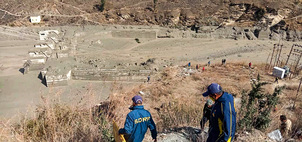
A glacier broke off at Joshimath in Uttarakhand’s Chamoli district on Sunday 7th February 2021, leading to a massive flood in the Dhauli Ganga River and causing large-scale devastation in the upper reaches of the ecologically fragile Himalayas [2].
Above both the disaster gives us the take away and best example of learning a lesson for preparing a safe future.
QCFI and SAFETY
To spread the awareness about the safety, Quality Circle Forum of India (QCFI) propagates the concept of Lean Safety Circle (LSC) in the industries and organization. This has been initiated by Mr. D K Srivastava, Executive Director, QCFI and is taking pace form 2010 onward. This also helps to motivate the employee to make the case study on the safety under Lean Safety Circle (LSC) for all levels in the organization in the form of cross functional team.
The concept of LSC is based on the lean principle of three types of waste, Muda (Wasteful activity), Muri (Wasteful design to reduce strain) and Mura (Wasteful implementation, over burden)
Here problem are selected which are, instant, given by the management and which are available in the problem bank. These problems are solved by using DMAIC methodology (Define, Measure, Analyse, Improve and Control) in place of 12 step methodology of Quality Circle.
The benefits of Lean Safety Circle (LQC) are
- Develop the team work
- Develop problem solving skill
- Develop innovative thinking
This will give the opportunity to the employee to present their case study in their own organization, QCFI Chapter convention, and National convention too.

No Comments
No comments yet.
RSS feed for comments on this post. TrackBack URI
Leave a comment