
INDUSTRY 4.0
There was a news from Press Information Bureau Government of India on National Capital Goods Policy and quoted that, The Union Cabinet, chaired by the Prime Minister Shri Narendra Modi has given its approval for National Capital Goods Policy. This is first ever policy for Capital Goods sector with a clear objective of increasing production of capital […] Read more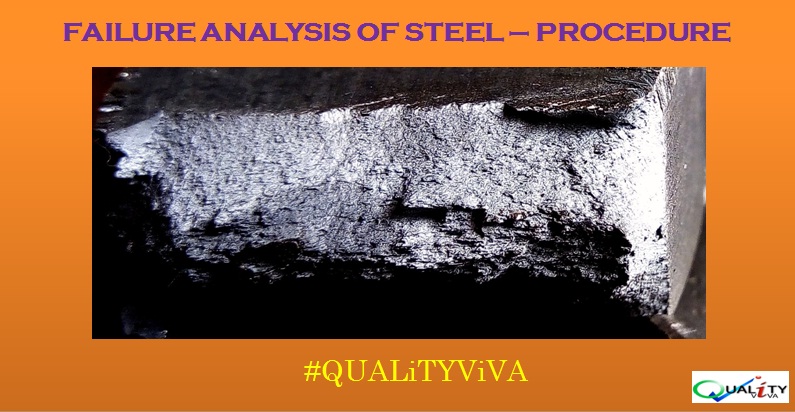
FAILURE ANALYSIS OF STEEL – PROCEDURE
To investigate the failure of the steel, following general procedure to be followed for systematic analysis of failure and corrective action through study of root cause can be taken, so that chances of failure in future can be eliminated by proper design and use of correct specification. For evaluation of the failure, categorized the failed […] Read more
ISO 45001: A welcome review (Occupational health and safety management systems- Requirements)
Occupational health and safety has its own importance and plays a major role at workplace and can be manage the involved risk by initiating the controls to mitigate risk as low as logical and practicable. In managing the risk at workplace, various issues and challenges has to be look into , such as complexity of […] Read more
DIAGNOSIS OF REQUIREMENT OF RISK BASE THINKING IN ISO 9001:2015 AND IATF 16949:2016
We can find lots of literature on the risk base thinking, risk management and many other related to risk, but here we diagnose and understand requirement , related and interrelated clause of risk base thinking with respect to ISO 9001:2015 and IATF16949:2016 in simplified and lucid way What is Risk? Risk is, Effect of uncertainty […] Read more
ISO/IEC 17025:2017 : Homework for readiness
It was just a more than a month for release of new edition of ISO/IEC 17025:2017, General requirements for the competence of testing and calibration laboratories. It is interesting to do some homework on this new edition of ISO/IEC 17025:2017, studying highlights, main changes and focus area. Highlights are, This standard ,ISO/IEC 17025:2017 was developed […] Read more
The 8 Wastage – MiNT “O” DEW
In Japanese language “Waste” is “Muda” and muda is part of lean manufacturing, which is a method for eliminating the Muda (wastage). To implement the methodology for eliminating the Muda (wastage) in product manufacturing industry and / or in service industry one has to understand, What is Wastage (Muda)? What are types of wastage ? […] Read more
MILESTONE – 1400/2900
Wish you all a very Happy New Year 2018. I take this opportunity to share my blog statistics, which is started on wordpress from 24th May 2017, though little bit writing continues from 1990. As on 31.12.2017, that is in last 7-8 months total 20 articles are published on different topic related to quality, like […] Read more
Diagnosis of IATF 16949:2016 clause – 7.1.5.1.1 Measurement System Analysis (MSA)
Clause – 7.1.5.1.1 Measurement System Analysis Statistical study shall be conducted to analyse the variation present in the result of each type of inspection, measurement, and test equipment system identified in the control plan. The analytical method and acceptance criteria used shall conform to those in reference manual on measurement system analysis. Other analytical method […] Read more